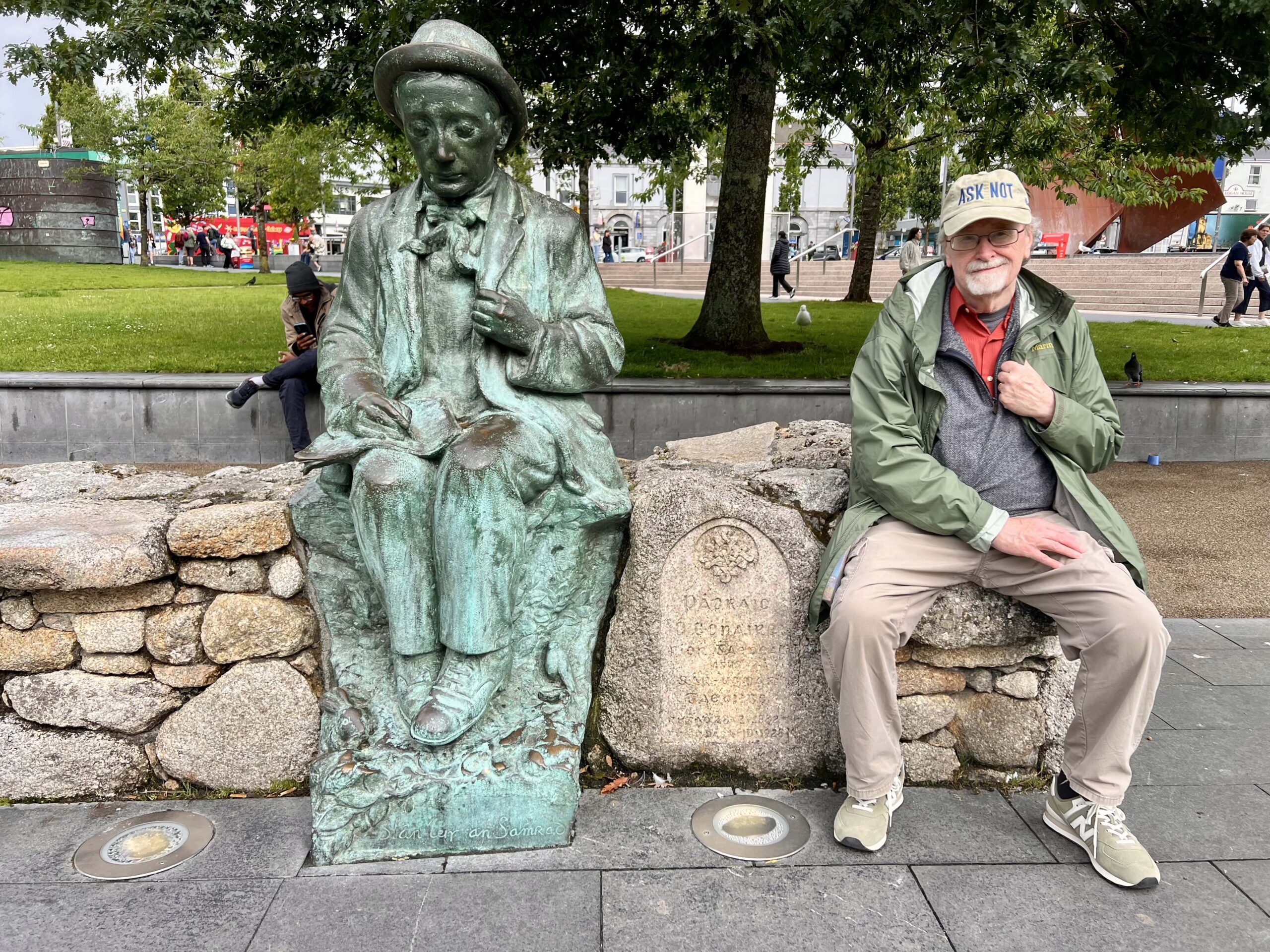
On a stroll through Eyre Square (no relation to Jane) in the center of Galway, we came across a bronze statue of a seated figure dressed in simple, worn clothing and labeled “Pádraic Ó Connie,” a name we soon realized was revered in Galway and throughout the Republic of Ireland. Born Patrick Joseph Connor to a publican in the docks of Galway in 1882, he was orphaned at eleven and raised by his uncle and his paternal grandparents in Ros Muc in Connemara in what was then the Gaeltacht, or Irish-speaking, area of the island. Thus the young Patrick Connor, now known in Irish as Pádraic Ó Conaire, grew up fluent in English and in Irish Gaelic. Moving to London at 18 to take a job with the Civil Service, Ó Conaire began to read Russian, French, and Scandinavian writers voraciously. He also discovered the Gaelic League and became involved in their mission to promote the Irish language, history and culture, an aim that found fruition in the Gaelic Revival around the turn of the twentieth century. Ó Conaire’s love of literature inspired him to contribute to the Gaelic Revival by writing realistic stories set in the west of Ireland and written in the Irish language. He wrote 473 short stories (first in magazines and later collected into books), 237 essays, and six plays, all in the Irish language. And he wrote a short novel Deoraíocht (later translated into English as Exile) in 1910, which made him famous and is considered the most important novel of the Irish Revival. However, having quit his Civil Service job and returned to Ireland, he found that there was very little market for Irish language literature, and he ultimately died impoverished at 46 in 1928.
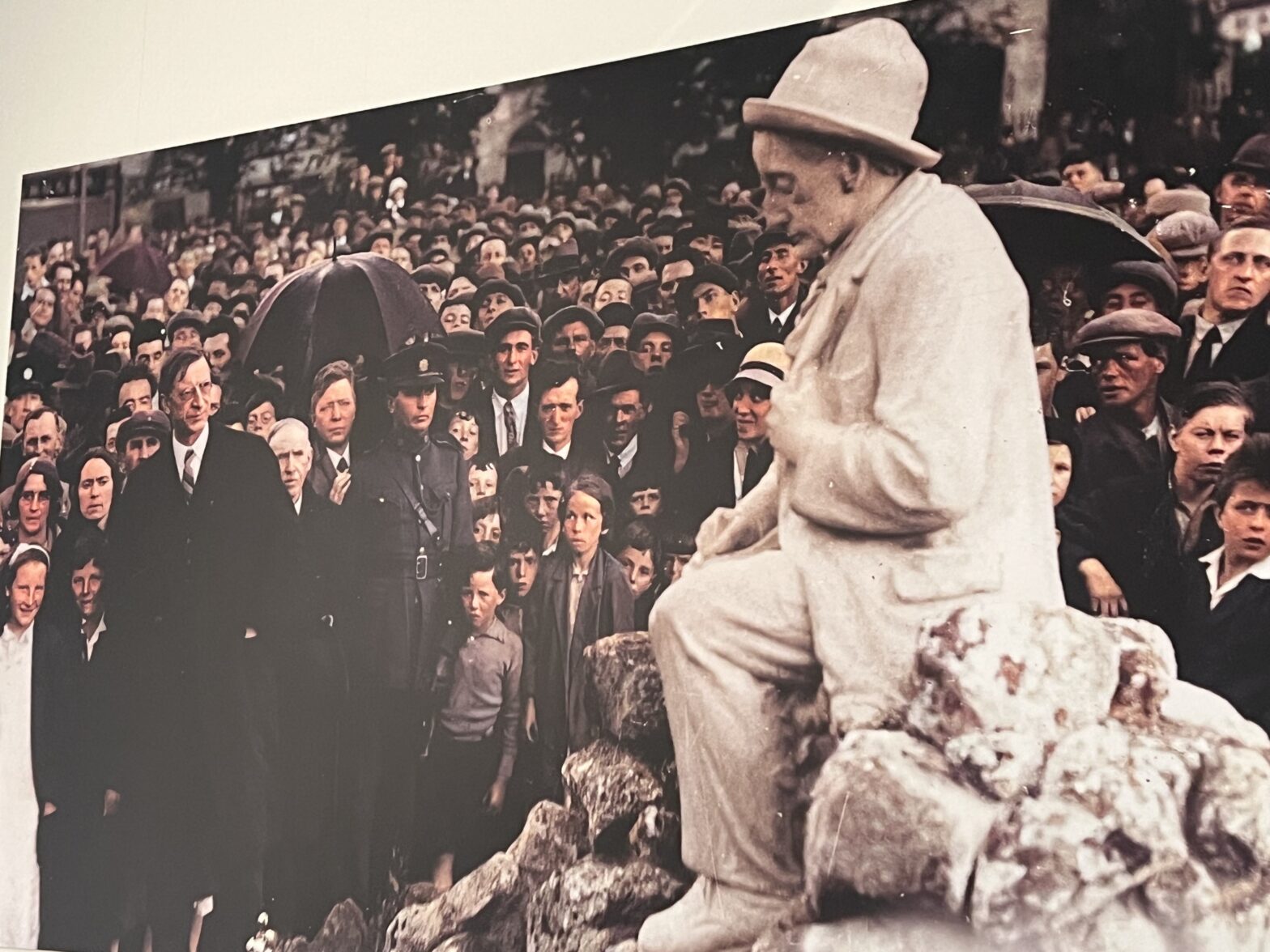
In his home town, the Galway branch of the Gaelic League immediately sought to create an appropriate memorial for their favorite son, and raised £200 toward that end. Convinced to take on the commission, master sculptor Albert Power began the statue when he finally was able to obtain an appropriately flawless piece of native limestone began in 1932, completing it in 1935. The Galway committee invited the Irish Republic’s premier, Éamon de Valera, to unveil the statue in Eyre Square. Like Ó Conaire, de Valera was an advocate for the Irish language, and in fact had attended Blackrock College with Ó Conaire in his youth (A picture of the original dedication appears as the first image in this post)
For decades the Ó Conaire statue was one of Galway’s most beloved landmarks. When it was vandalized in 1999, its head broken from its body, it was repaired, but rather than risk even worse vandalism in the future, the Galway City Council decided to commission a replica of the statue in bronze—which was the one we found in Eyre Square—and to place the original in the Galway City Museum, where we saw it a couple of days later.
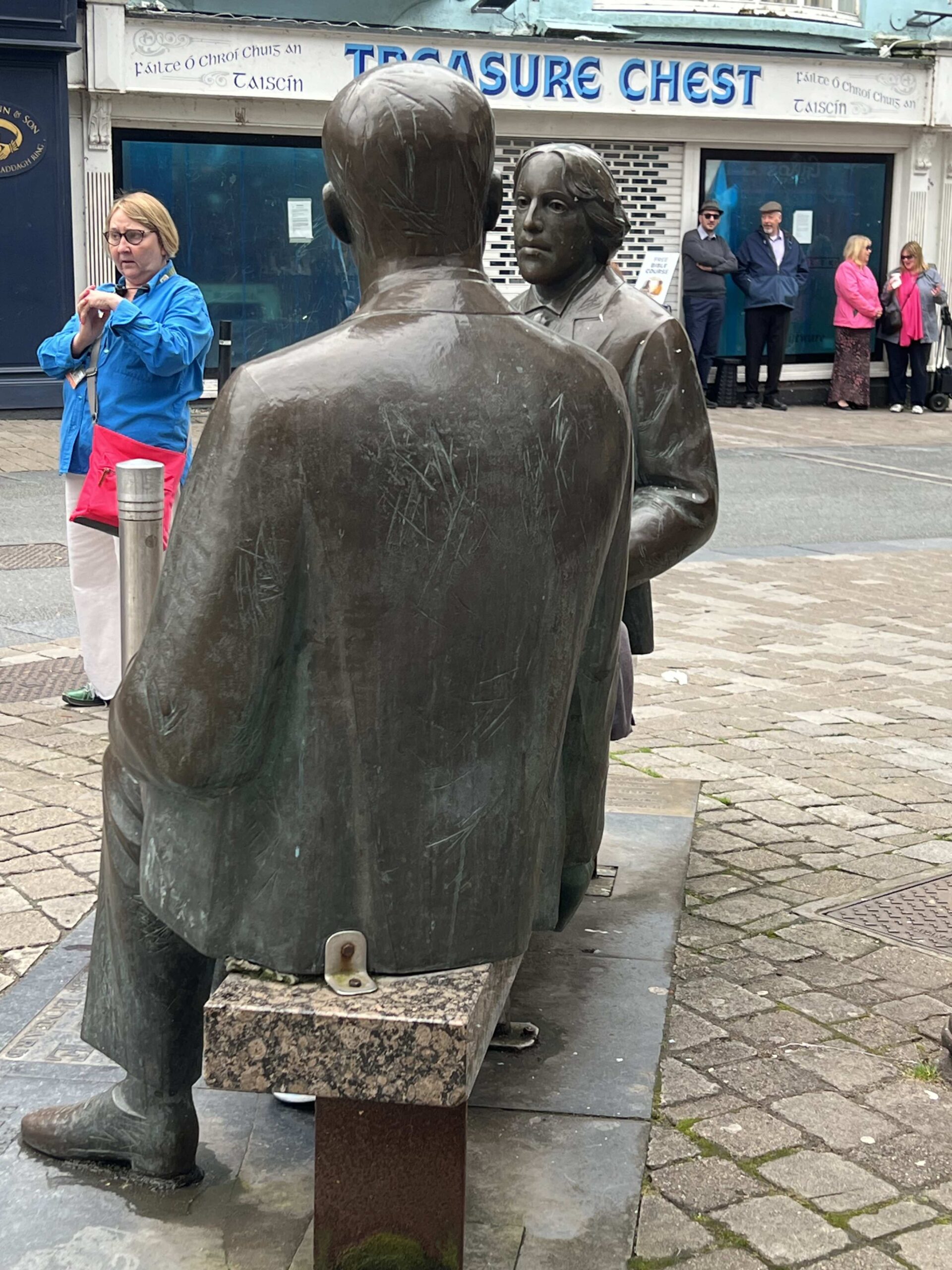
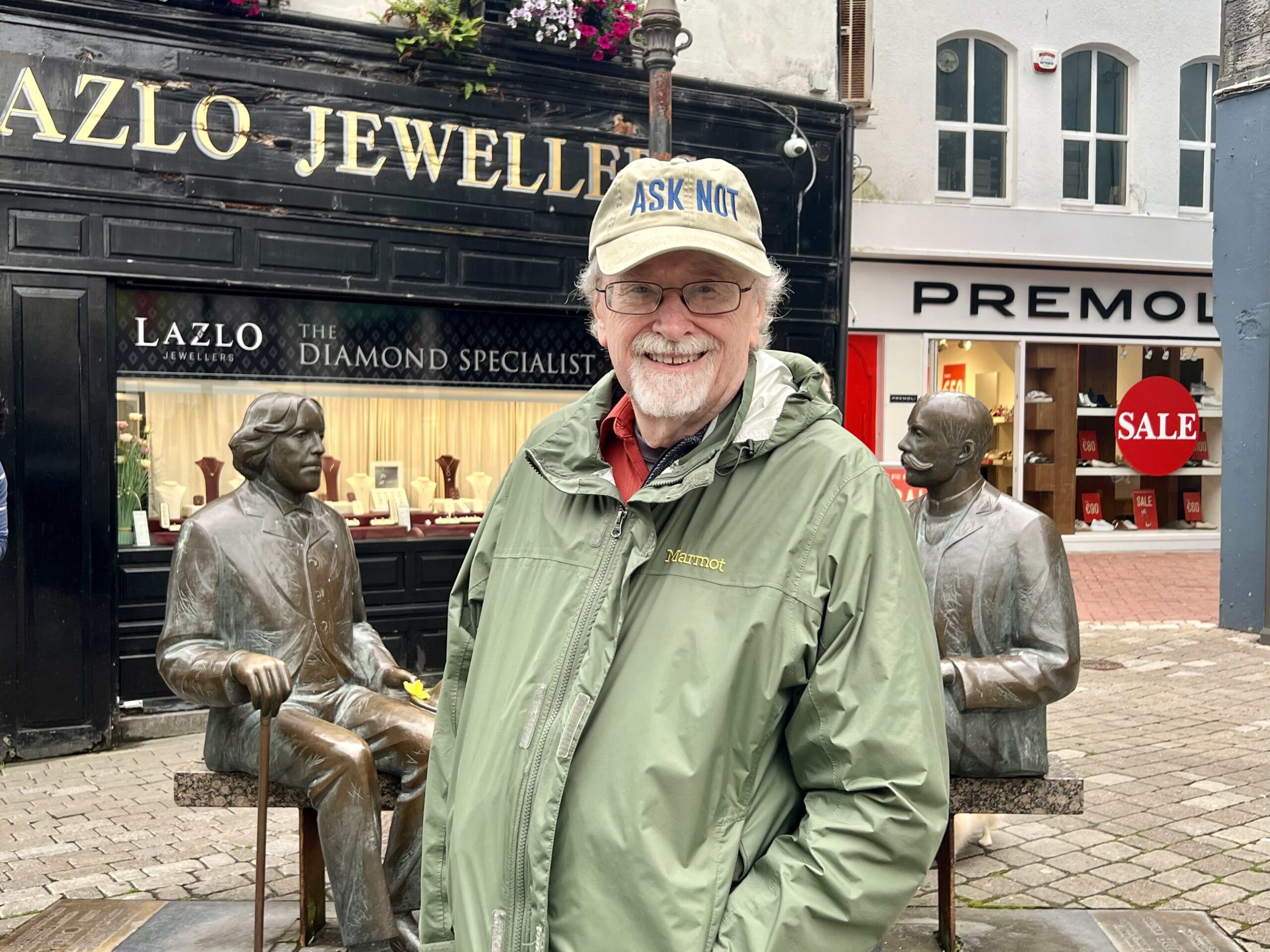
Stroll a couple of blocks northwest of Eyre Square and you’ll see on the sidewalk an equally famous Galway literary statue, this one featuring the popular and controversial Irish poet, novelist and playwright Oscar Wilde in bronze, sitting on a bench chatting with a bronze Eduard Vilde, the Estonian novelist credited with introducing the modern realist tradition into Estonian literature. The two men were contemporaries, but never actually met. So the puzzled tourist might ask, what’s this statue doing here?
Turns out this is a copy of the original statue, cast in 1999 by the Estonian sculptor Tiiu Kirsipuu, which stands in the Estonian city of Tartu. The inspiration for the sculpture seems to have come from the coincidental similarity of their surnames—“Wilde” would be pronounced the same as “Vilde” in Estonian—and the fact that they were acclaimed near-contemporary writers, coupled, perhaps with the idea that Vilde had brought Estonian literature into conversation with the best of the Western literary tradition. At any rate, when Estonia entered the E.U. in 2004, Tartu sent this copy of the sculpture to Galway as a gesture of friendship.
But why, you may well ask, send the statue to Galway instead of to, I don’t know, say, Dublin? Well Dear Reader, Tartu is the second-largest city of Estonia, much smaller than the capital, Tallin. If Tartu was looking for a “sister city” in Ireland, Galway is about the same size—it’s the fourth largest city in the Irish Republic and is the largest city in the province of Connacht. And there’s one other thing: Dublin already has plenty of statues of Oscar Wilde.
Wilde, of course, is associated with Dublin, having been born and raised there. He attended Trinity College, and later Oxford’s Magdalen College, and, as a classicist, studied under Walter Pater and John Ruskin. He then exploded onto the literary scene in London in the 1890s. Why Galway? Well, in fact, Wilde did have a family history in Connacht, in the west: His great grandfather Ralph Wilde had come to Ireland from Durham in England, and settled in County Roscommon in Connacht. Oscar’s father, Sir William Wilde, had grown up in Roscommon, and brought his children to Connacht for their holidays to a lodge on the banks of Lough Fee in Galway County. Later Sir William built a house in Cong in County Mayo, about 20 miles from Galway City. Oscar spent the summers of his formative years here in the west of Ireland and learned to feel at home with the oral storytelling traditions of this part of Ireland. So Galway, and the province of Connacht, have every right to boast a statue of the great proponent of Art for Art’s Sake here in the heart of the city. Unfortunately, a visiting Wilde lover may get little or no chance to sit on the bench next to his hero. People hog the bench all day long, and show no sign of getting up for you to sit down. Hence the picture—where I can be seen blocking out the seated hogging figures.
For an even more joyous literary pilgrimage, you need to put Sligo on your list. Sligo is the second largest town in Connacht (at only about 20,000 inhabitants) and it’s about 85 miles north of Galway—a good two hours by bus. Sligo is an object of pilgrimage for lovers of Irish poetry as the home town of William Butler Yeats, greatest of all Irish poets and the most significant poet in the English language in the 20th century (sorry, Eliot fans). My main advice here is, don’t go on a Monday. What you will find is that the Yeats museum in the heart of Sligo, maintained by the Yeats society, is closed on Mondays. (So is the art museum, where the poet’s brother’s art is exhibited.)
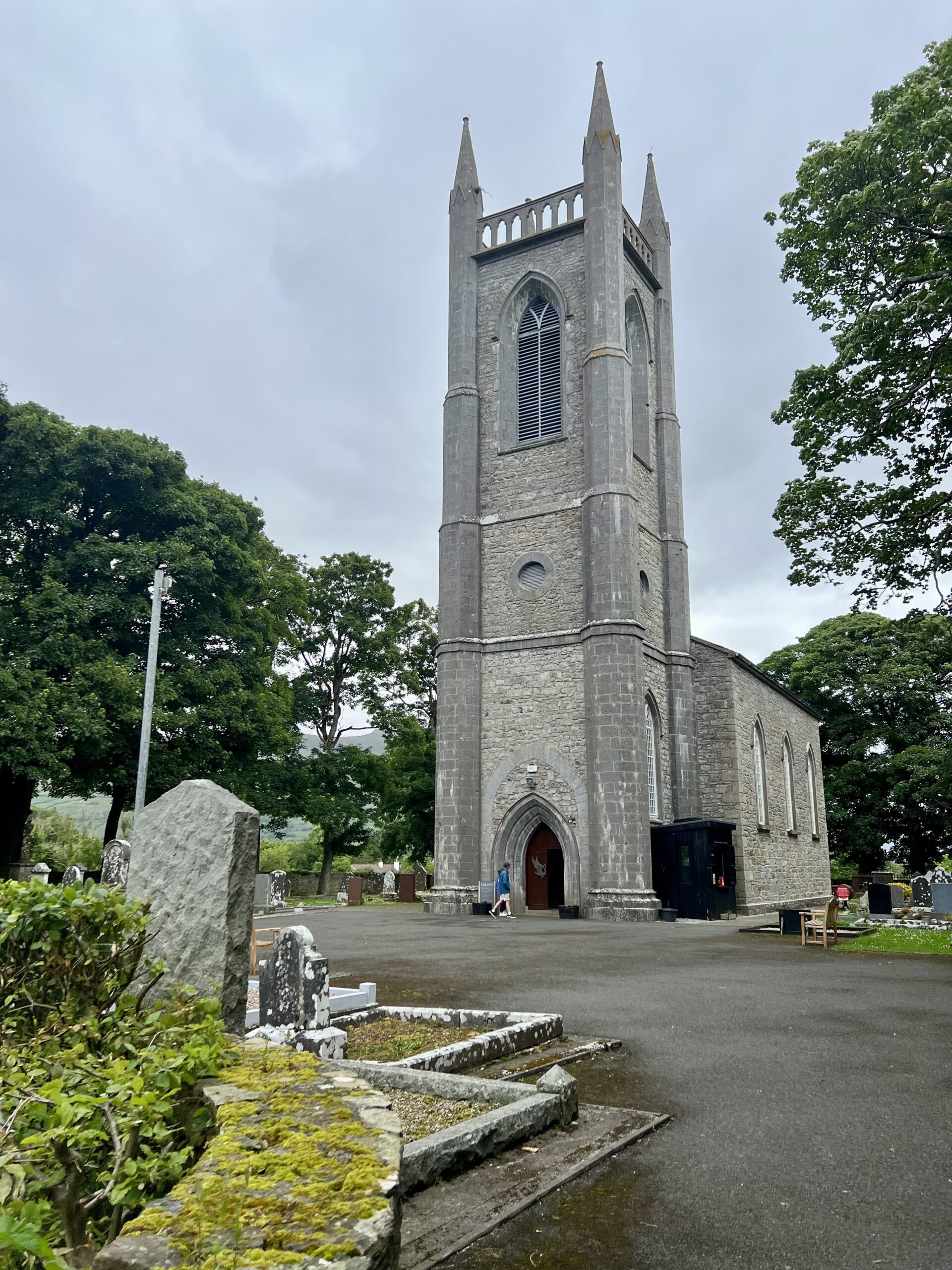
That’s what we found when we got there. Nevertheless, just a few miles outside of Sligo is the smaller village of Drumcliff. And as you should know from reading the sixth and final section of Yeats’ last great poem, “Under Ben Bulben”:
Under bare Ben Bulben’s head
In Drumcliff churchyard Yeats is laid,
An ancestor was rector there
Long years ago; a church stands near,
By the road an ancient Cross.
No marble, no conventional phrase,
On limestone quarried near the spot
By his command these words are cut:
Cast a cold eye
On life, on death.
Horseman, pass by!
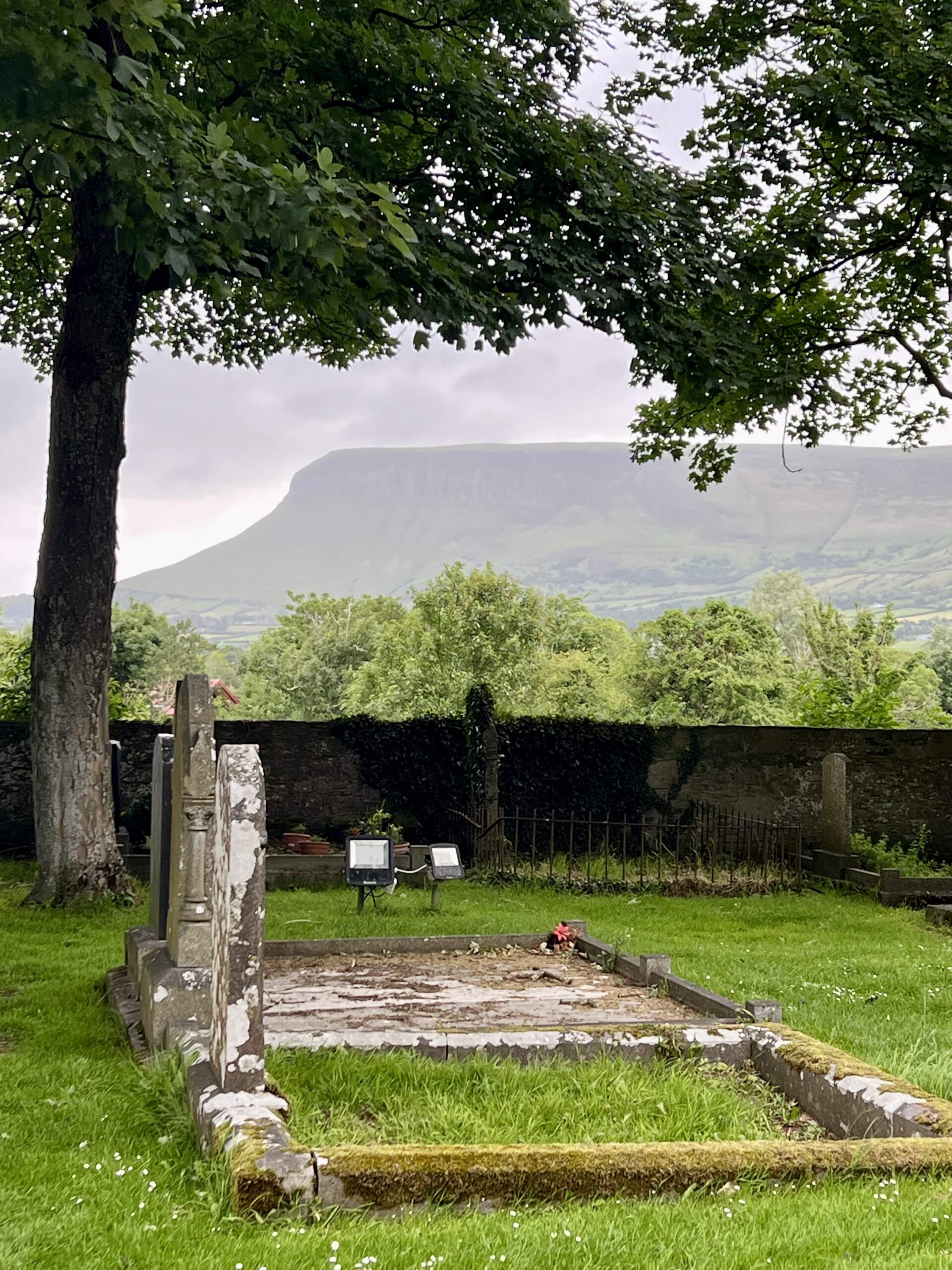
Essentially Yeats (literally on his deathbed) was giving instructions for how and where he wanted to be buried. Though he died in Menton, France, on January 28, 1939, he told his young wife Georgie to bury him there in France, and then a year or so later, “when the newspapers have forgotten me, dig me up and plant me in Sligo.” But the Second World War broke out before that year had passed, and when his body was exhumed after the end of the war, French authorities botched the job and mixed his remains with those of others in an ossuary. A forensic doctor separated what seemed to be Yeats’ bones from others and returned those to Sligo in 1948, when what I’m going to have faith was mostly Yeats was reburied according to his wishes in Drumcliff churchyard. Georgie was later buried in the same plot.
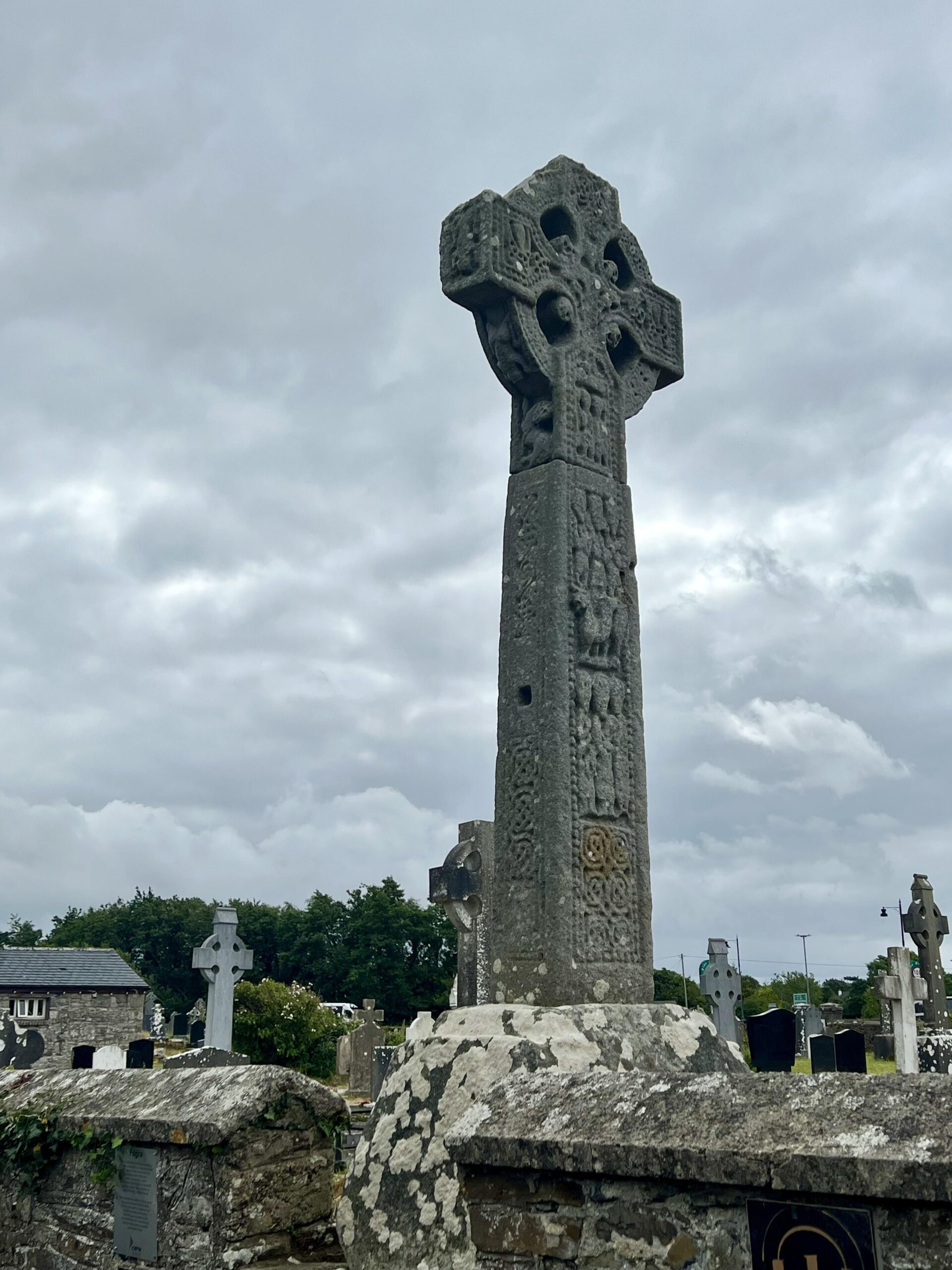
You can get to Drumcliff fairly easily from Sligo, either by bus (there are several a day—if you travel as we did from Galway to Sligo on the bus to Derry, you can actually just stay on the bus one stop past Sligo, which lets you off a short walk from the cemetery) or by taxi or Uber (which we did to head back into Sligo). The bus drops you just past the entrance to the churchyard, and as you walk down that short road you’ll pass a very tall 11th-century Celtic High Cross on your right (“by the road an ancient cross”) which is worth a close look, and then, when you approach the door to the Church (St. Columba’s, where W.B.’s great-grandfather John Yeats had indeed been rector from 1805 till his death in 1846), look to your left, and near the door on that side of the church is Yeats’ grave.
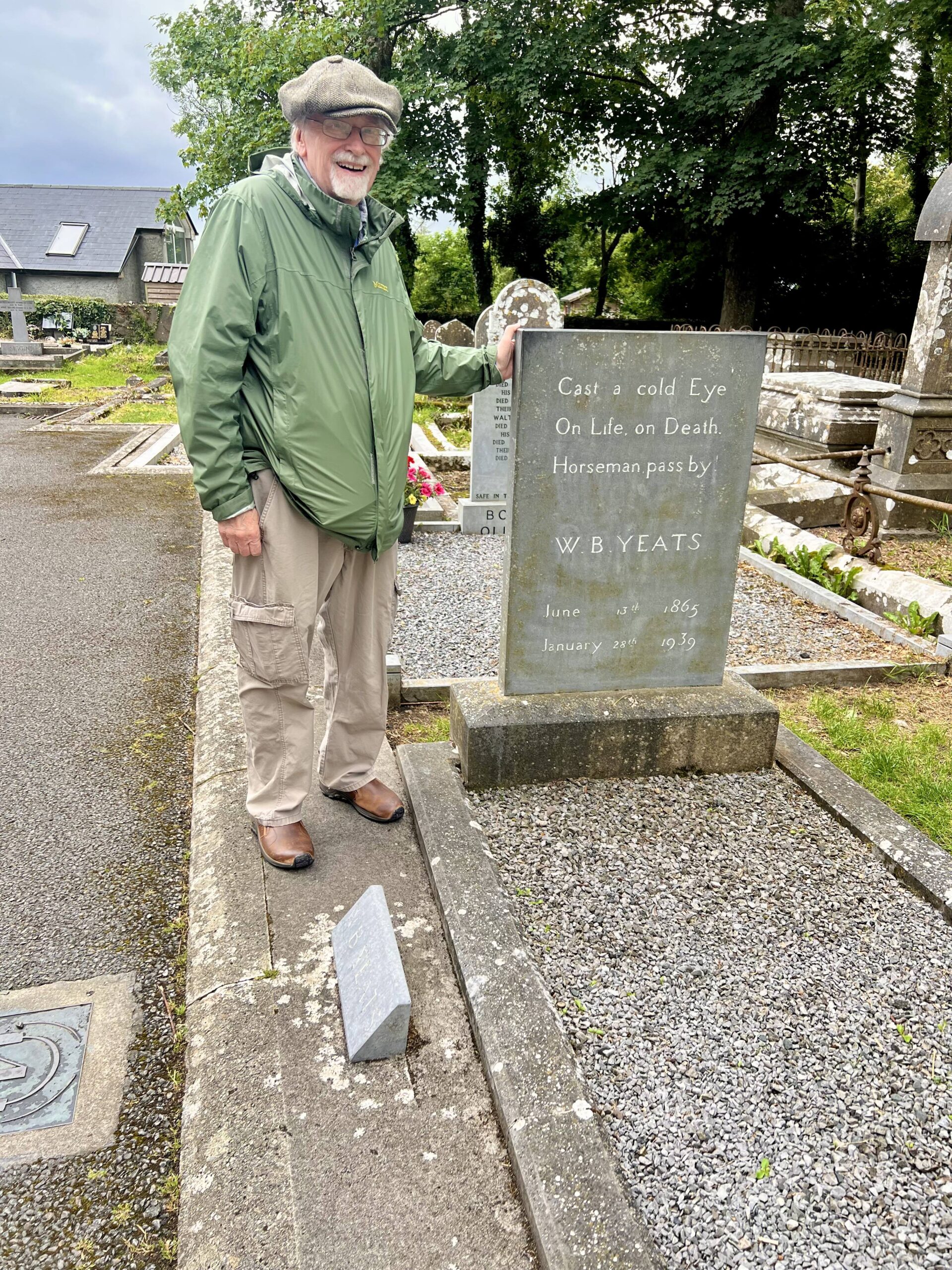
With the rocky flat-topped form of Benbulben looming in the background, you can read Yeats’ enigmatic self-composed epitaph on the limestone grave marker, taller than others in the churchyard but still relatively modest for Ireland’s first Nobel Prize recipient. If you’re not moved by standing next to that marker, you’re no lover of poetry yourself.
When you get back to Sligo, you really ought to take a good hour or so to tour the ruins of “Sligo Abbey.” In fact this was a Dominican priory founded in 1253. It was damaged by fire and rebuilt beginning in 1416, escaped dissolution during Elizabeth I’s reign, but was destroyed in 1642 by local English landlord Sir Frederic Hamilton, after which the Dominicans left for Spain and the building fell into ruin. The town still used the priory’s graveyard as the local cemetery, until a horrific cholera epidemic of 1832, which killed 1500 Sligo residents in a period of six weeks.
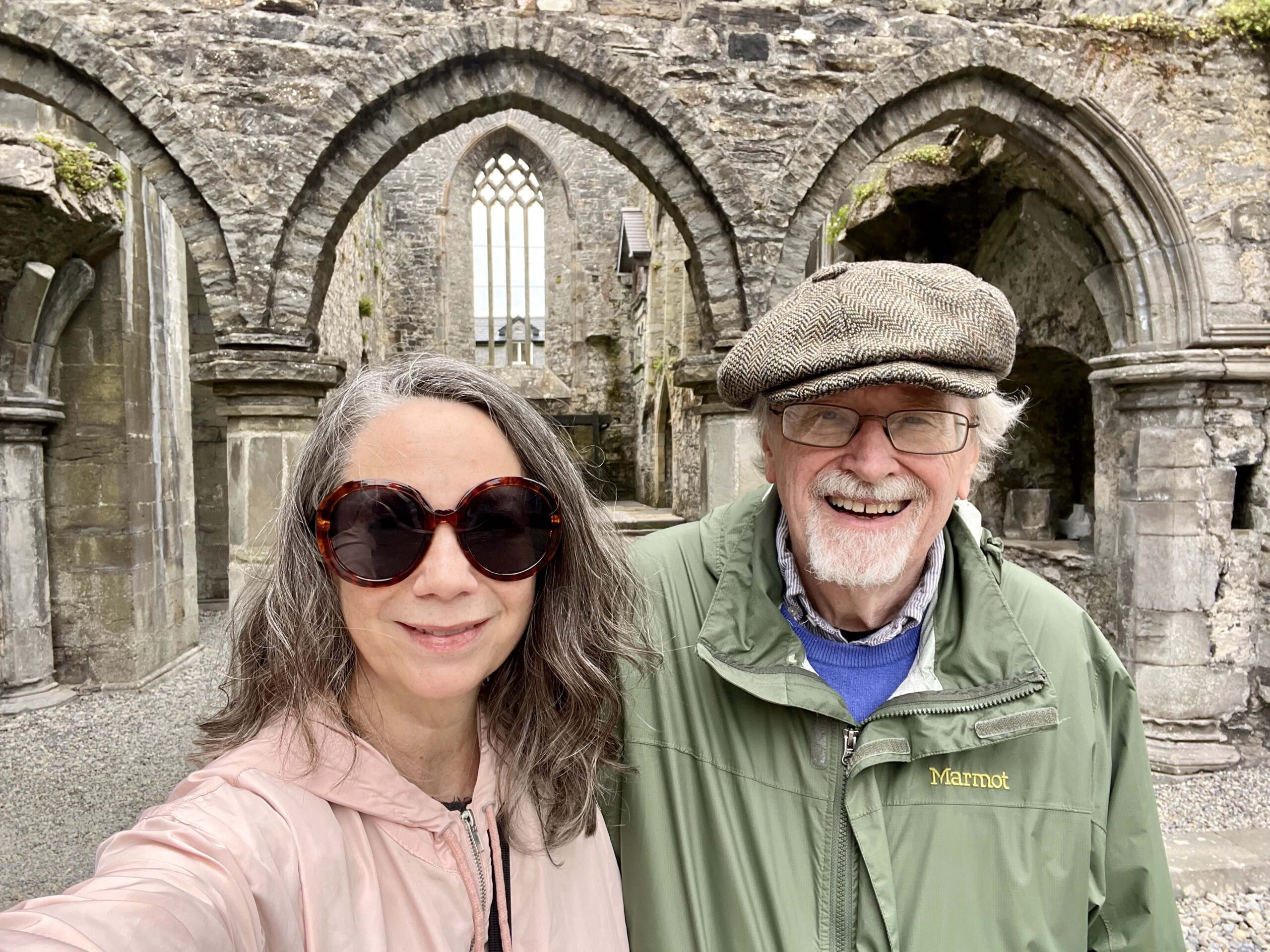
This in itself may not seem relevant to a blog on writers, but a survivor of those six weeks, a young 14-year-old girl named Charlotte Thornley, daughter of a Sligo policeman, wrote a first-hand memoir of that time that she published in 1873, called “Experiences of the Cholera in Ireland,” which describes the horrors of those six weeks and reads like a gothic horror tale. The nightmarish memories stayed with young Charlotte after she married and moved to Dublin, where in 1847 she gave birth to a son whom she called Abraham, after his father, Abraham Stoker. She regaled her young son with many stories, some of which came out of her Sligo experiences, and when the boy, nicknamed “Bram,” grew up, he made use of Charlotte’s cholera horror-stories to help him write his own most famous novel—a little thing called Dracula.
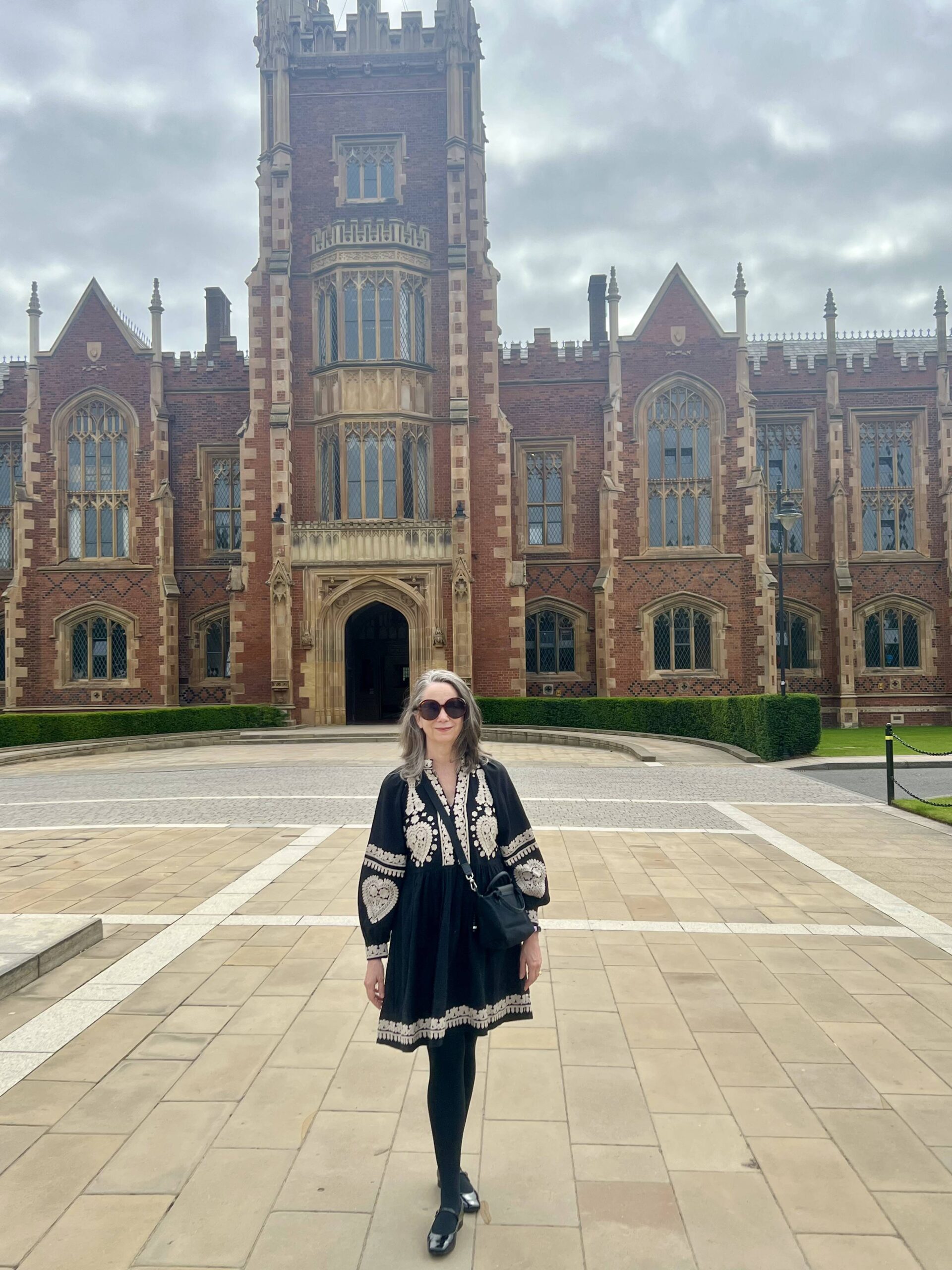
Back to Galway, and hence to Belfast, by train, via Dublin, we reached our next destination in about three hours. Now there is a great deal to do in Belfast, much of it not exactly literary. But Belfast was the childhood home of C.S. Lewis, and his home and a square named in his honor can be found on the east side of the city, which is unfortunately well off the beaten tourist path, so you may not make it there if you’re short on time.
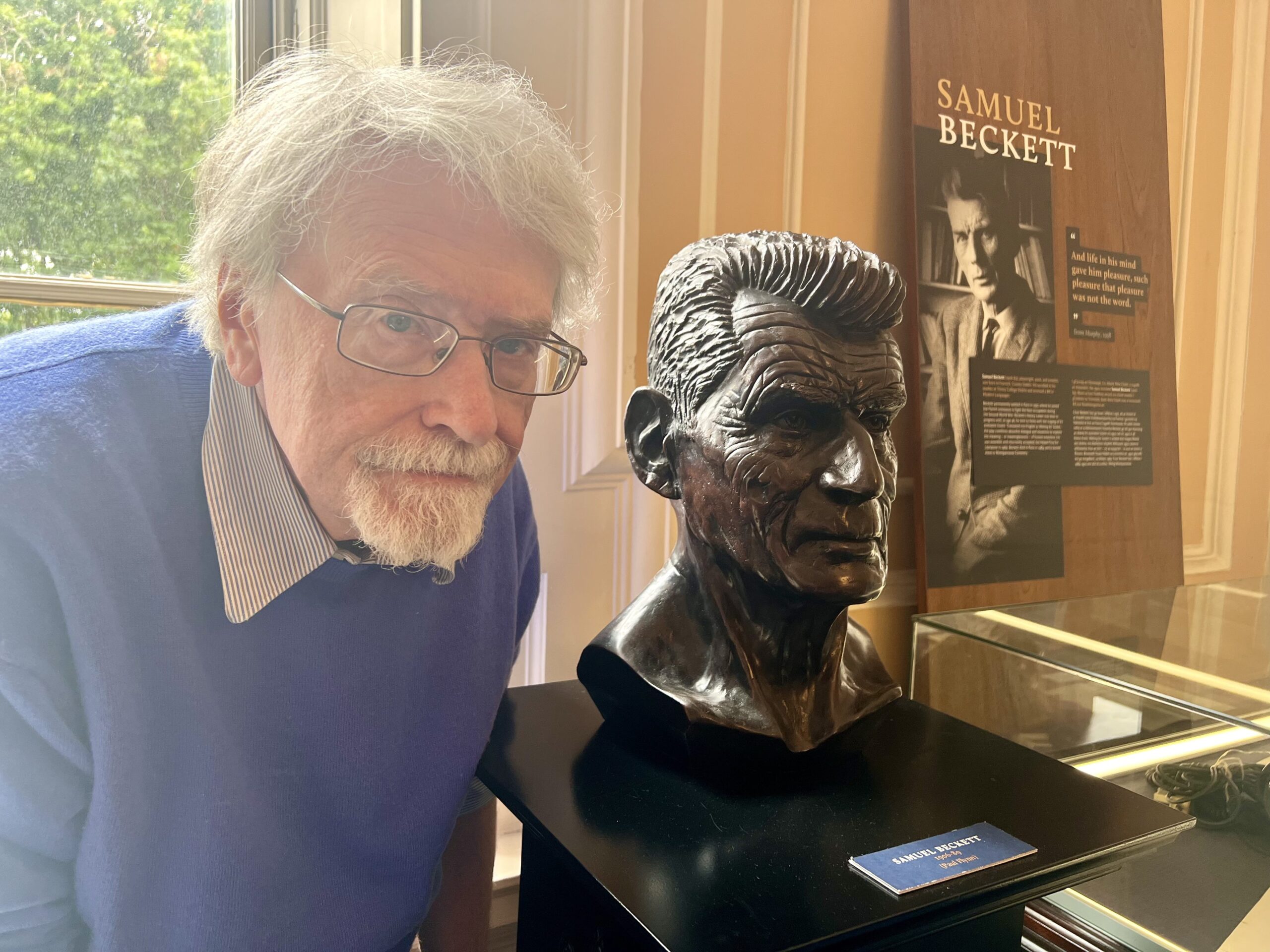
Also in East Belfast, on the Belmont Road, one can see a mural of Samuel Beckett. The Dublin-born 1969 Nobel prize winner taught at Campbell College in Belfast for a couple of years before moving on to Paris. The mural, again, was in a part of Belfast we didn’t make it to.
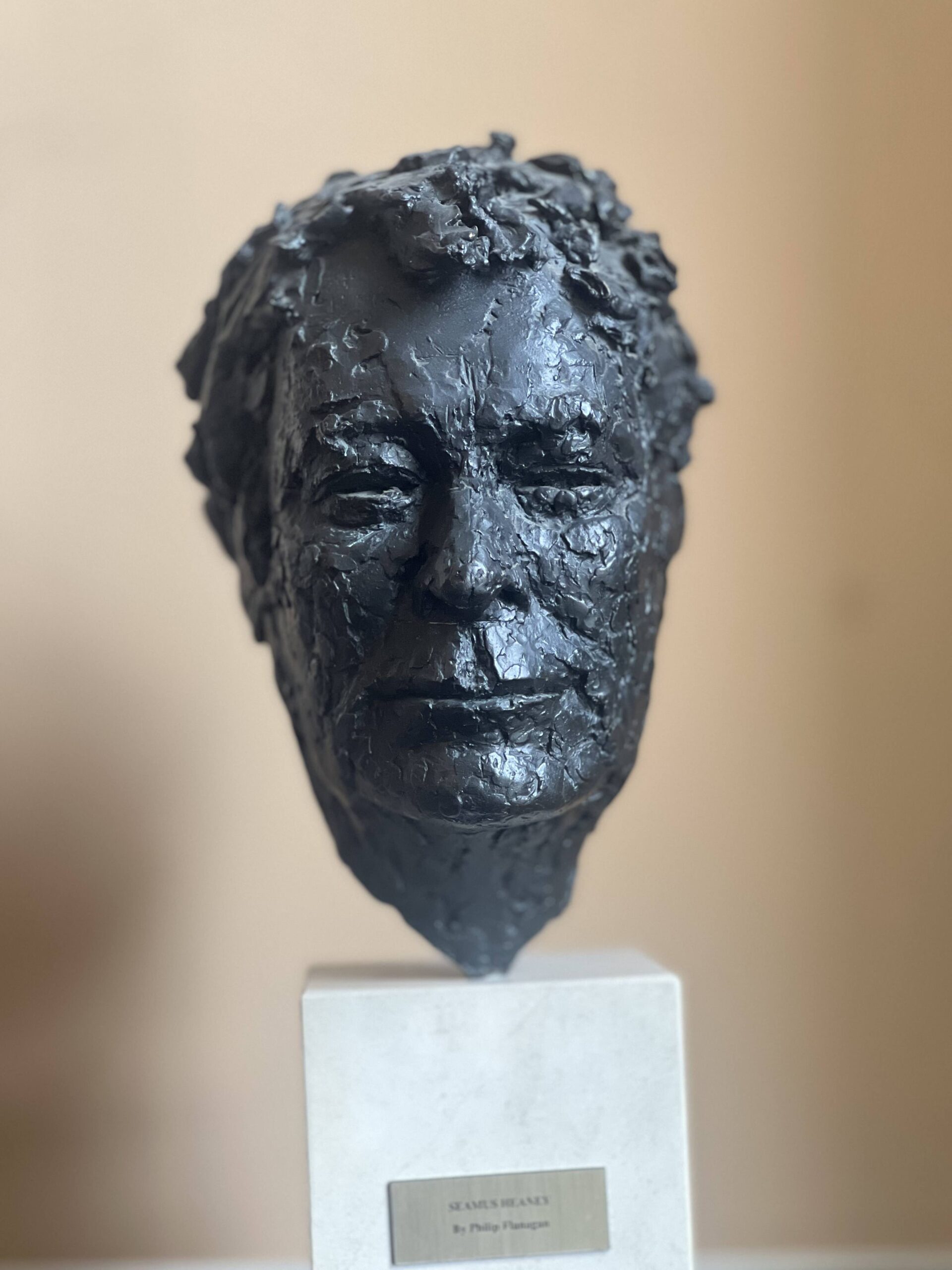
As for the 1995 Nobel Prize recipient, poet Seamus Heaney, he was born in county Derry, and his homeplace can be visited there at Bellaghy, about 35 miles from Belfast. But Heaney lived for several years in Belfast, where he first studied and then taught at Queen’s University, where there is a Seamus Heaney Centre for Poetry in his honor and which is easy to get to by public transportation or the convenient Hop On Hop Off bus.
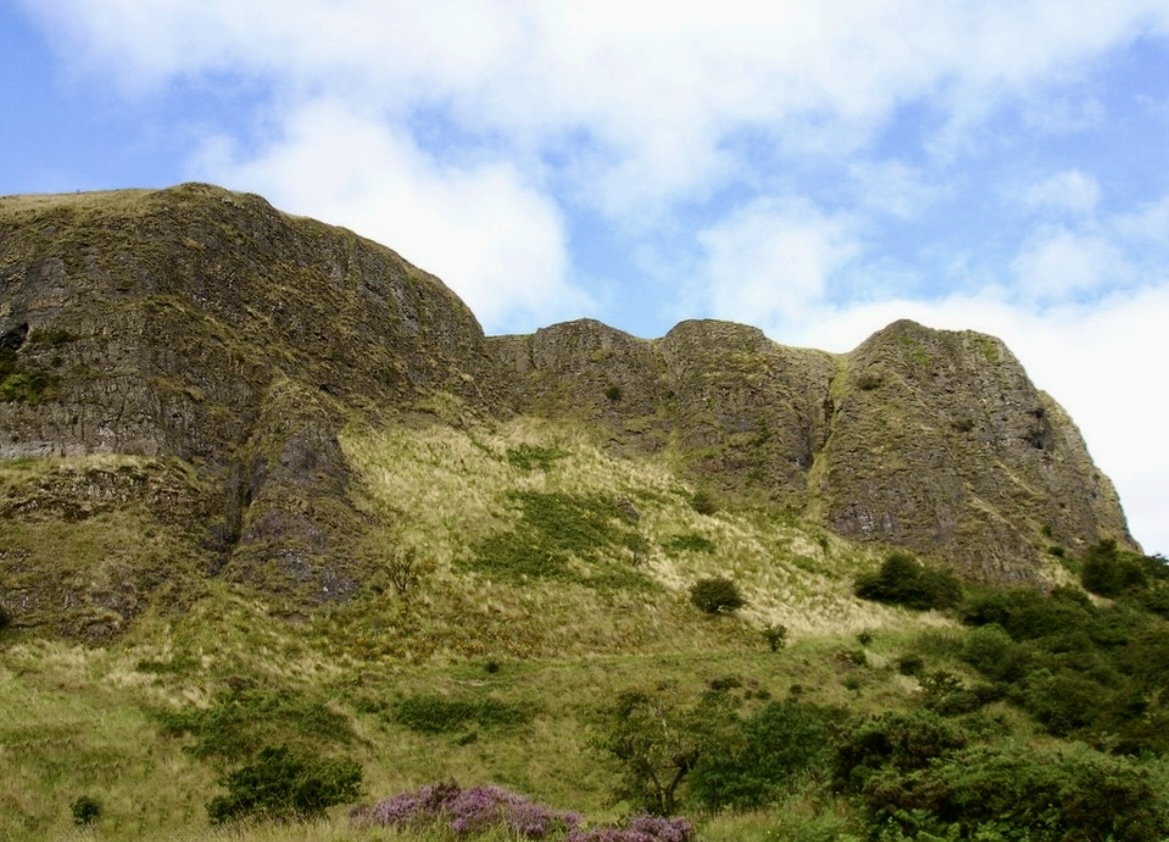
One other writer who does not necessarily spring to mind as Irish is Jonathan Swift, so important a figure in English literature that the first half of the eighteenth century is conceded to be the “Age of Swift.” But one need only to remember the theme of “A Modest Proposal” or visit St Patrick’s Cathedral in Dublin and see Swift’s death mask there in the place he spent 32 years as Dean to recall his Irish connections. His connection with Belfast? Well, if you’re heading out of town for a tour of Giant’s Causeway or the north coast, take a look on your left at the formation known as Cave Hill. According to the story, Swift visiting Belfast took a look at Cave Hill and it appeared to him to resemble a sleeping giant protecting Belfast City, which is supposed to have inspired him to imagine a sleeping Gulliver among the people of Lilliput.
We trained back to Dublin where we had half a day before our flight home, and of course we had to decide how to spend it. A visit to the aforementioned St. Patrick’s would have been a good choice. Visiting Trinity College for a glimpse of the Book of Kells was tempting. But one place that did not exist the last time we were in Dublin (on our honeymoon 24 years ago) is the Museum of Literature Ireland (MoLI, pronounced “Molly,” in honor of Joyce’s Molly Bloom). The museum opened in September 2019 at 86 St. Stephen’s Green in Newman House, a part of University College, Dublin (UCD). This is a building where Gerard Manley Hopkins once worked as an instructor, and where James Joyce (as well as his character Stephen Daedalus) once attended classes.
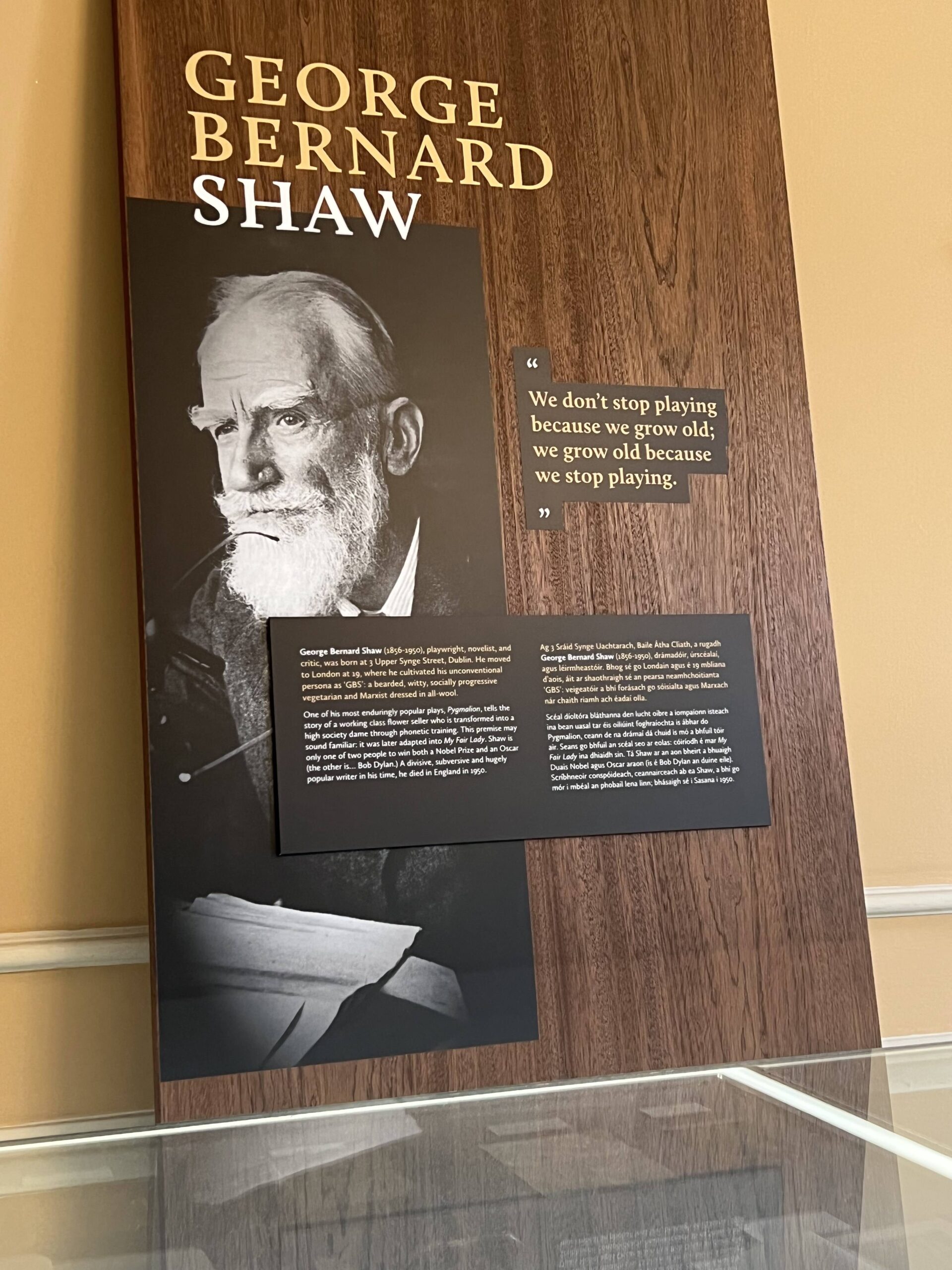
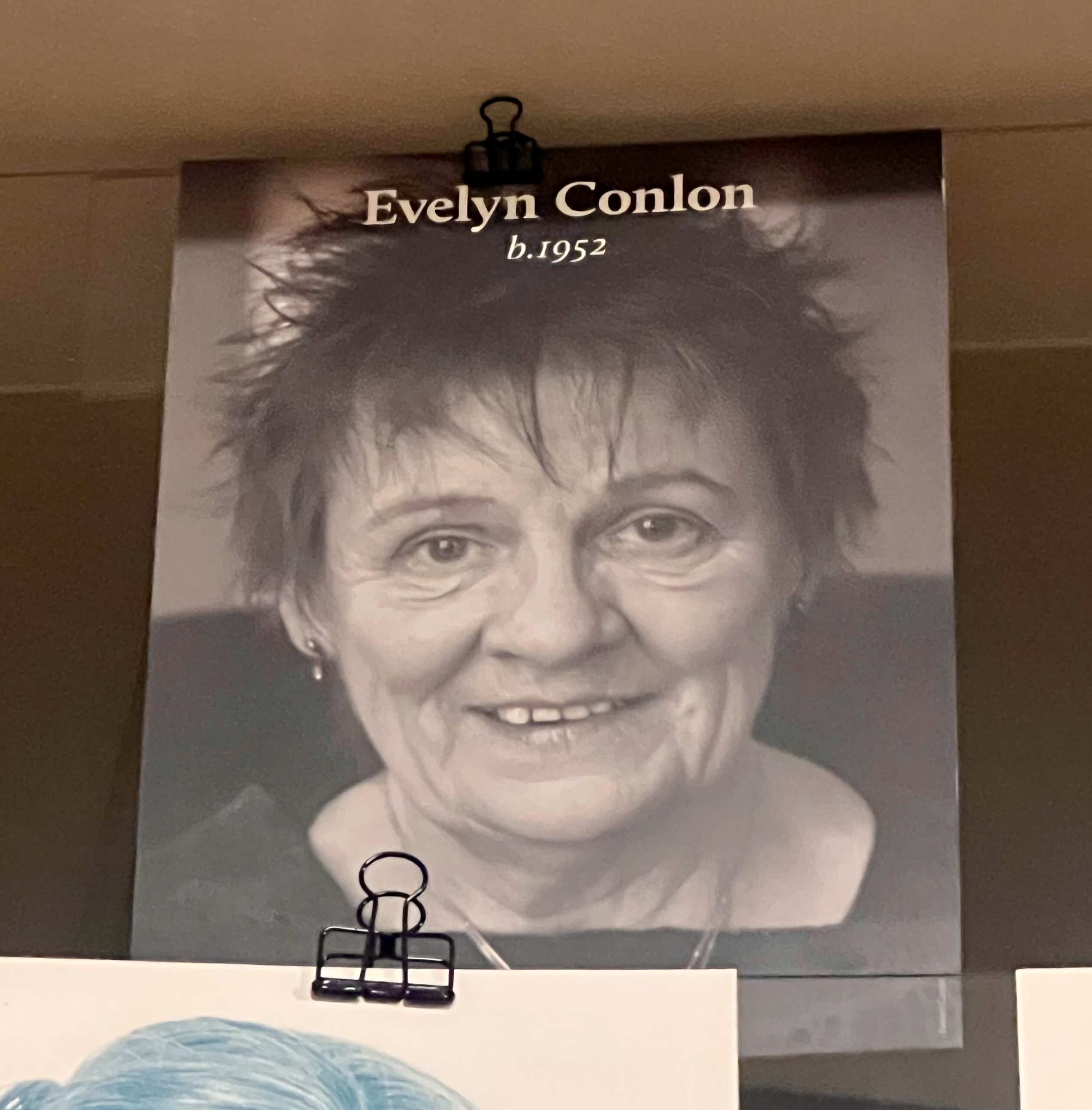
The ground floor of the building is a kind of “Hall of Fame” with bronze busts and informative placards of Ireland’s greatest writers (Yeats, Beckett, Wilde, Heaney, Bernard Shaw, Brendan Behan, and of course Joyce himself), with more imaginative immersive exhibitions on the upper floors. We saw our friend Evelyn Conlon included in the panoply of Irish Writers on the ground floor.
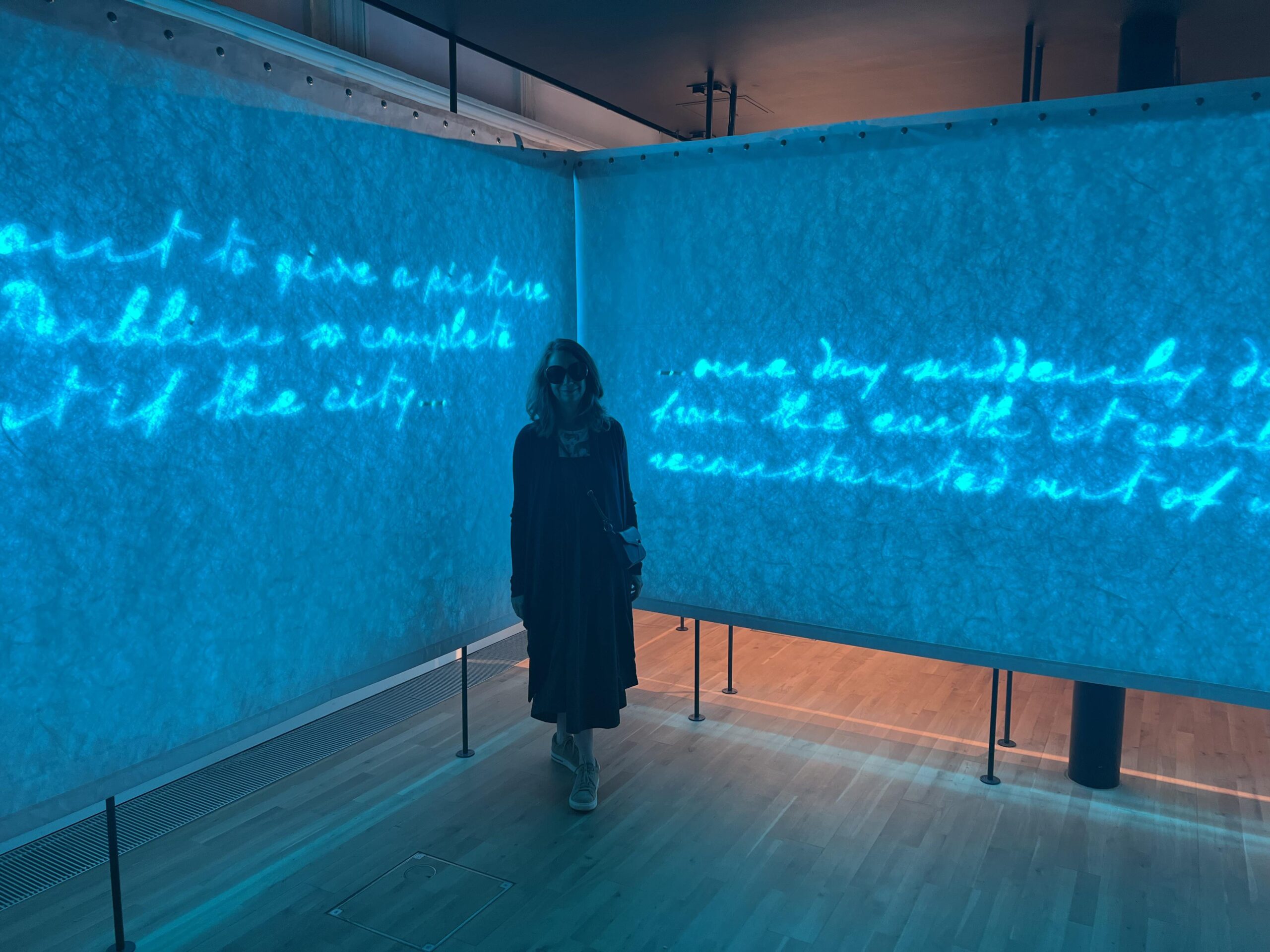
These are generally limited or revolving exhibitions: on our visit, what stood out was an exhibition on Oscar Wilde’s De Profundis, which will be on display through October 1. The only work Wilde competed during his two-year imprisonment for “gross indecency” is billed here as one of “the greatest love letters ever written,” and is presented as a film installation with the narration being a reading of the text. On the same floor is what I believe is a permanent exhibition called “Riverrun of Language” (playing on the first word of Joyce’s Finnegans Wake), visitors walk about in a room until they set off a Joycean quotation which they will hear from speakers in the room, and will see projected on the large white walls.
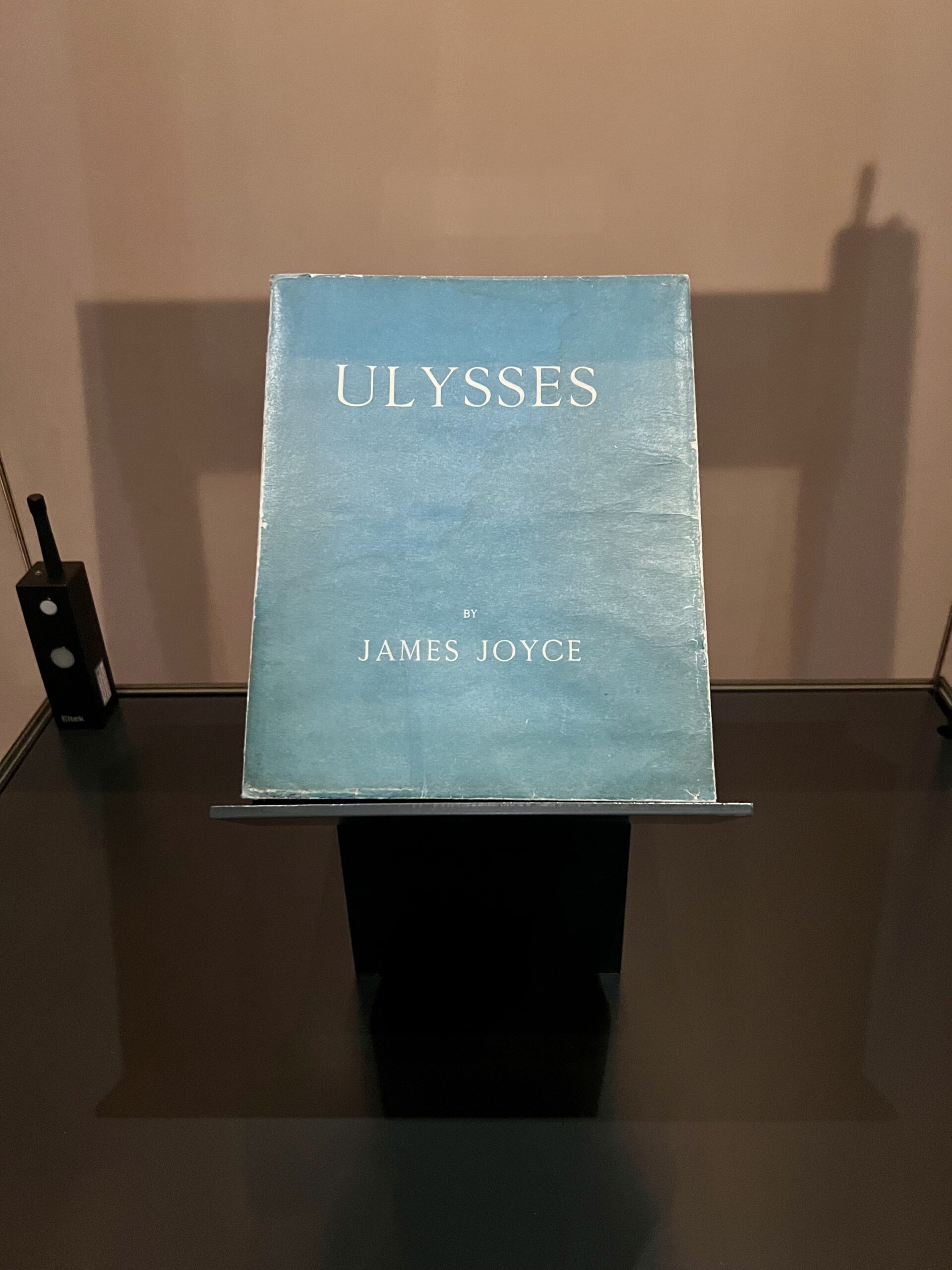
But the central display of the museum, the climax of our visit to the MoLI, is “Copy Number 1” of Joyce’s Ulysses. This is the very first copy off the press of the novel widely considered the greatest, or the most significant, or the most influential novel in the English language, and is inscribed to Joyce’s patron Harriet Weaver—who had serialized the novel in her magazine The Egoist and, when unable to find a publisher for it in Great Britain or Ireland, found a willing publisher in Paris.
This was the climax of the museum, of our time in Ireland, and ultimately of our literary journey through Ireland. And of this blog post. I encourage you to go and do likewise.